The following reports and briefings have been produced thanks to the support of our core funders: The European Climate Foundation, the Goldsmith Foundation and the Esmee Fairbairn Foundation.
Bespoke analysis, reports and briefings on a range of topics can be commissioned - please contact us if you wish to discuss options.
An update to Sandbag's 2012 briefing on the UK Carbon Floor Price in light of the 2013 budget and recent developments.
Sandbag's formal written submission to the European Commission stakeholder consultation on structural reforms to the EU Emissions Trading Scheme. Our submission argues for the cancellation of 2.2. billion allowances to restore the scarcity originally envisaged in the scheme and to help align the ETS with a 30% domestic EU climate target in 2020. It also recommends a suite of measures to ensure a scarcity of allowances, and adequate environmental ambition over the longer term.
This briefing, published jointly with WWF Greece, highlights the surpluses accruing to all Greek manufacturing sectors, and focussing on the ten most oversupplied companies operating in the ETS in Greece. For two companies profiled, Lafarge and Titan Cement are shown to be protected against ETS costs by free allowances all the way out until 2020. The report is also available in Greek
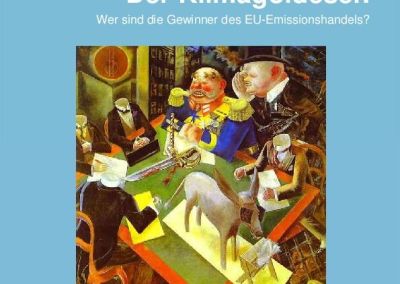
This new report, published jointly by Sandbag and Friends of the Earth Germany (BUND), finds that German manufacturer's have accrued spare carbon allowances equivalent to the annual emissions of Austria, while just ten companies have potentially profited by as much as €1.2 billion from the scheme.
Released in advance of key EU votes to withhold ETS allowances from auctions, this report updates research conducted in our first Klimagoldesel [Climate cash-cow] report from November 2011.
The report is also available in German at: http://www.bund.net/klimagoldesel2013
The European Parliament will soon vote on the European Commission’s proposal to amend the EU’s Emissions Trading Scheme(EU ETS) Directive. In order to correct the massive imbalance between supply and demand in the carbon market, the European Commission has proposed to delay the auctioning of 900 million (mln) allowances, a process called “back-‐loading”. The Parliament and EU governments have been asked to clarify the mandate of the Commission with regards to delaying the timing of emission allowance auctions.
Sandbag's written evidence submitted to the UK Environmental Audit Committee on the Energy Intensive Users Compensation Scheme. Our submission called for the government to factor in any overcompensation for direct ETS compliance costs (i.e. superfluous free allowances) before awarding any new compensations for indirect costs incurred. We also warned against several other potential overcompensation issues present in the EU State Aid Guidelines. This evidence appears in the official EAC report alongside a transcript of our oral evidence to the hearing.
Sandbag's official submission to the Department of Business Innovation and Skills on compensating Energy Intensive Users for the indirect costs of the EU ETS and UK Carbon Floor Price.
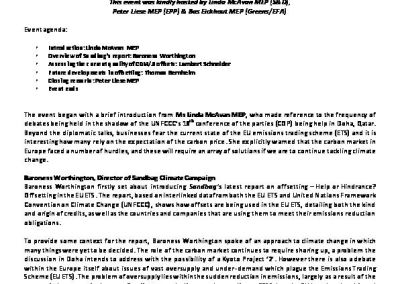
Summary of the discussion at the Brussels launch of Sandbag's Help or Hindrance? Offsetting in the EU ETS report
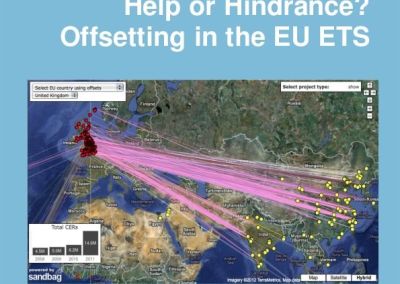
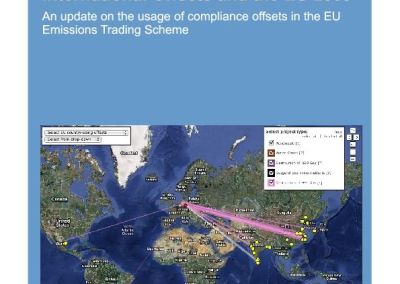
This report follows on from work analysing offset usage that Sandbag started in 2009. Its primary purpose is to highlight what is happening on the ground. Linking the installations in the EU ETS with the projects they bought offset from has brought the use of carbon credits to life, as well as dramatically increasing the transparency of the system. The development of our web-based interactive maps (see: www.sandbag.org.uk/maps/offset) will further add to the transparency of how European companies utilise offsets as a means to meet compliance obligations.
A collaboration between Sandbag and WWF Belgium, this briefing identifies the ten companies which have obtained the largest surpluses of ETS allowances from the Belgian government. Against industry's claims that the ETS drives operations overseas, the briefing finds clear evidence that monetizing spare allowances helped companies to survive the recession.
Response to the public consultation on the EU ETS backloading proposal
This joint briefing with the Centre for Transport and Energy (CDE) investigates the current level of allowance oversupply in the Czech Republic, and specifically at the top ten companies who have amassed the largest amount of allowances.
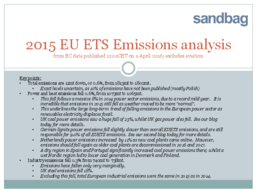
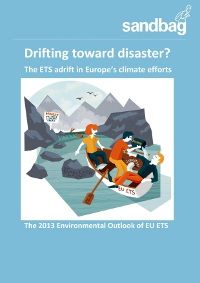
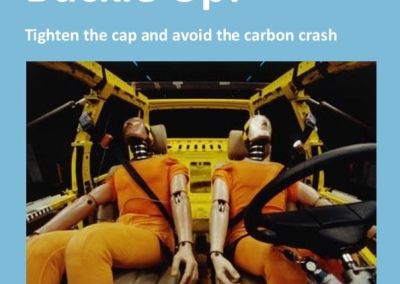
Losing the lead is Sandbag’s 4th annual report on the Environmental Outlook for the EU ETS – following on from ETS S.O.S. (2009), Cap or Trap? (2010) and Buckle Up! (2011). This report again uses latest emissions data to examine how the ETS is performing on the ground and makes recommendations for urgent reforms. In particular, it highlights that existing proposals to reform the scheme inadequately account for the change in demand for allowances since the caps were last set (2.2Gt), and the effects of industrial overallocation on the cap (0.9Gt). This report also updates our list of Carbon Fatcat companies accruing the largest surpluses of free allowances within the scheme.
Summary of the discussion at the joint launch event of Sandbag and the SEI's Chinese emissions trading reports.
This report is not a comprehensive overview of Chinese environmental policy; it intends to act as a starting point for those wishing to better understand why and how China is slowly changing to adopt progressive policy instruments to tackle growing environmental concerns. Sandbag is particularly interested in the proposal to develop pilot emissions trading schemes as a precursor to establishing a national emissions trading scheme (ETS). It would be absurd to suggest that China is facing anything but an environmental catastrophe if it fails to act soon. It would be equally ridiculous not to look at China in context, a vast country experiencing rapid growth coupled with an increasing dependency on natural resources. We purposefully liken China's task of low carbon development to turning a tanker; a process that requires both time and patience. China has - as this report sets out to show - started to adjust the rudder, but it will take time for this behemoth to come about.
随着中国环境问题复杂化的加深,其正在逐渐采取更多不同的措施予以应对。但是这份报告并不是要对中国的环境政策进行全面的回顾。我们希望读者以该报告为契机,开始了解中国为什么以及将如何转向采取渐进性的方针政策去解决环境问题。在众多政策当中,中国提出了碳排放交易试点的建议,并希望在2015年进行全国推广,沙袋对此尤其感到兴趣。
作为一个大国,中国所面对的问题都非常有挑战性。其低碳之路同样任重道远。我们将这一艰巨的过程——一个漫长且需要耐心等待的过程——比喻成一辆正在转向的巨大邮轮。正如这份报告所指出的,中国已经开始慢慢调舵朝低碳的方向驶去。随着时间的推移,这条巨龙将会越来越绿。
This briefing is prepared to coincide with the meeting of Energy and Environment Ministers in Horsens Denmark. It reviews some of the main options for ETS reform, exploring measures both to fix the supply of allowances in the short term and also to establish an investment framework that prevents carbon lock-in over the long term.
We conclude that a substantial set aside is urgently needed, which not only accounts for new surpluses under the Energy Efficiency Directive but also corrects for existing surpluses caused by industrial oversupply. We argue that these allowances should later be cancelled through a re-opening of the Directive in order to reap an environmental benefit and not merely an improved investment signal. We recommend establishing a new linear reduction factor for the scheme which aligns with Europe’s 2050 climate goals, effective from 2020 at the latest. Finally, we discuss features which might be introduced to the scheme if the Directive is reopened to protect from unexpected demand fluctuations on an ongoing basis.
This short briefing explains what a carbon floor price is and why the UK Government believes it is needed. It also highlights some concerns and briefly explores alternative options.
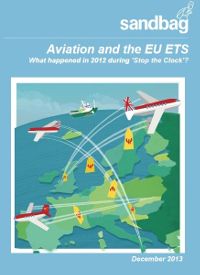
This briefing explores the cost in 2012 of the EU ETS to the UK's top 20 emitting airlines compared to the cost of the removal of fuel subsidies, such as introducing a tax on kerosene.
This briefing was prepared specifically for the MEPs in the Inustry, Technology and Research Committee ahead of their meeting on February 28th and outlines Sandbag's recommendations for how reforms to the ETS should be approached through the draft Energy Efficieny Directive legislation.
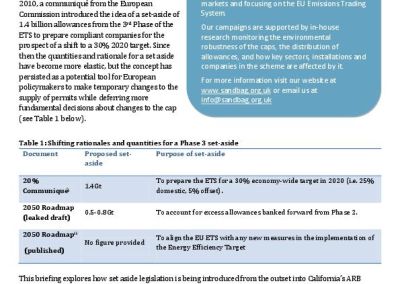
This briefing explores how set aside legislation is being introduced from the outset into California’s cap-and-trade legislation. The Californian scheme contains two strategic reserves of permits: the larger one is an Allowance Price Containment Reserve, which helps prevent both high and low prices in the market. The second is a Voluntary Renewable Energy Reserve which protects the decarbonising efforts of ethical energy consumers. We present these as legislative options that the EU policymakers may wish to follow here in Europe.
In den vergangenen Jahren haben wir bereits in verschiedenen Berichten dargestellt, ob und wie sich das europäische Emissionshandelssystem (EU ETS) bewährt hat. Unter Nutzung öffentlich zugänglicher sowie von uns selbst ermittelter Daten haben wir nun untersucht, wie dieses System auf Unternehmensebene funktioniert. Dabei hat sich herausgestellt, dass einige Unternehmen aufgrund kostenloser Zuteilung von Emissionszertifikaten erhebliche Überschüsse an eben diesen Zertifikaten angehäuft haben. Der vorliegende Bericht nimmt diejenigen Sektoren und Unternehmen in Deutschland ins Visier, welche die größten Überschüsse gehortet haben – denn Deutschland ist das EU-Land mit dem größten vom EU ETS erfassten Emissionsvolumen und hält somit eine Schlüsselposition in der Frage, ob und wie dieses Handelssystem reformiert werden wird.
Please note: since the publication of Klimagoldesel, we have received new information on installation ownership and waste gas transfers that has revised some of our figures for the top ten companies. The English report now contains an addendum updating our figures. A German translation will be available shortly.
Sandbag submitted this memorandum as written evidence towards the latest ECC Select Committee inquiry. The ECC Committee describes the inquiry as follows:
The EU ETS is the principal policy instrument for climate change mitigation in the EU. This inquiry will investigate whether the system can deliver the EU’s climate change mitigation goals in the absence of a legally-binding international emissions reduction commitment.
Three years into Europe's Emissions Trading System second trading period - how is it performing? This report provides a comprehensive assessment of the environmental outlook of the ETS, covering permit allocations, oversupply, companies use of offsets and projected effectiveness of the cap through to 2020.
It finds that the huge overallocation to industry in Phase 2 has left a double legacy undermining the effectiveness of the scheme to 2020 and beyond: a carryover of permits banked into Phase 3 and an inflated baseline which affects the starting position of the declining carbon cap beginning in 2013. The result: a likely oversupply that grows to an eye-watering 1.9 billion tonnes through to 2020, equivalent of a year's worth of carbon permits in the scheme.
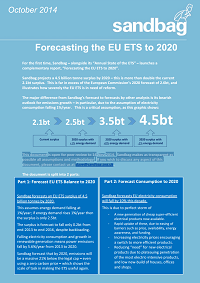
Sandbag recommends a number of measure to save the ETS from redundancy: that the European Commission propose set-aside of 1.7 billion permits before 2013, as well as opening up the Directive by 2015 to adjust the cap.
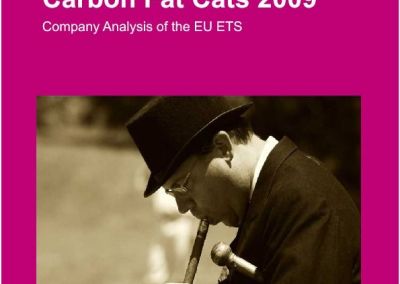
Thanks to overly optimistic forecasts of growth and fierce lobbying by heavy industry the EU Emissions Trading Scheme (ETS) has failed to incentivise cost effective reductions in emissions and instead enabled some companies to profit from the scheme. This report looks at those companies who have made the most substantial gains: our Carbon Fat Cats.
The fact that the ETS has provided substantial windfalls to some participants and a money making opportunity for many others has not prevented industry from attacking it whenever it can and from successfully lobbying to keep it in its current state: oversupplied with allowances and exerting only the weakest pressure on participants to invest in a low carbon future.
Interactive map available at www.carbonfatcats.eu
On the 16th May 2011 the European Commission released the final emissions trading data for 2010, giving the most up-to-date picture yet of how the system is functioning. Included in this data is the total use of international offset credits, from both Clean Development Mechanism (CDM) and Joint Implementation (JI) projects.
NGOs welcome the European Commission’s moves to increase the security of the EU ETS. Bolstering security measures to ensure an effective trading system is of paramount importance.
Increased security measures, however, should not come at the detriment of transparency and accountability.
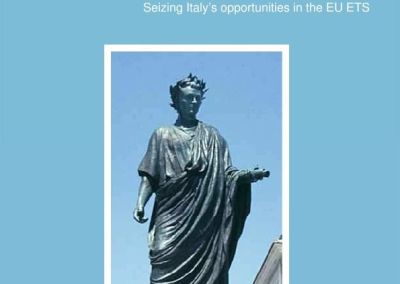
To date Italy has perceived its obligations under both the Kyoto Protocol and the EU Emissions Trading System purely as a punitive cost to be shouldered rather than an opportunity for development. Not only has this made Italy nervous of European efforts to increase climate ambition, it has become a self-fulfilling prophecy: to meet its Kyoto targets Italy stands to spend billions of Euros on emission reductions overseas that would have been better spent improving Italy’s energy infrastructure and security. Without a change in strategy Italy stands to haemorrhage additional billions meeting its European climate commitments through to 2020.
An Italian translation of the report is also available.
Sandbag comment piece on the California Air Resources Board proposal’s for introducing a Cap and Trade Program
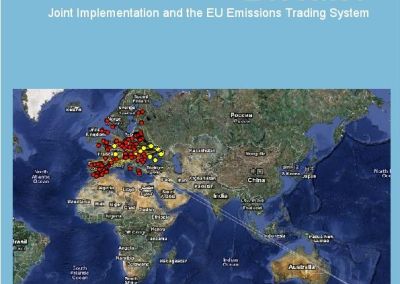
This report follows on from Sandbag’s ‘International Offsets and the EU 2009’ report released in July 2010. That report focused specifically on the use of CDM credits generated in uncapped countries, which make up the overwhelming majority of offsets used for compliance in the EU ETS to date. Nevertheless it was noticed that in 2009 there was a sharp increase in the number of JI credits from capped countries being surrendered for compliance. With much of the focus on the CDM it is easy to overlook the use of JI.
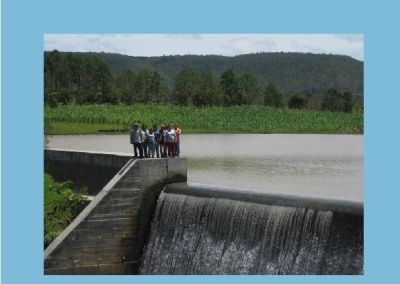
This report critically evaluates the perfomance and prospects of the EU ETS as it currently stands. It explores how Phase 2 caps have been weakend by recession, and how slack from Phase 2 - in the form of unused offset credits - is likely to defer abatement within the EU for much of Phase 3. In addition we explore how large, undeserved surpluses have accrued to specific sectors and companies within the EU ETS.
Our companies analysis can also be viewed as the Carbon Fatcats 2009 pullout displayed below.
The report includes a note of correction from October 2010.
This report revisits the companies holding the largest surpluses in 2008 to see how they have fared since the recession. New analyses explores potential intra-European competitiveness distortions introduced by these surpluses, and investigates how Phase III caps might affect these companies.
This is a pullout from our Cap or Trap report displayed above.
The UNFCCC separates CDM and joint implementation (JI) project credits into 15 sectoral scope types. These sectoral scopes broadly differentiate the different project types, however, they do not always provide the most useful definitions, for example renewable and non-renewable project are included under the same sectoral type. For this reason Sandbag has further broken down the UN definitions into more detailed project types. This makes it clear what type of emissions reductions credits are entering the EU ETS and also makes the data more accessible for the lay person.
Offsetting is clearly being used very successfully by many of the participants in the EU trading system. It is serving to reduce prices of compliance and delivering substantial volumes of finance (circa €860 m per annum) to countries outside of Europe. We wish to use the information we present here to illustrate how the scheme is working. It is clear that contrary to the claims made by industry it would not be 'impossible'1 for the EU to take on more ambitious climate targets since there is a readily available source of abatement accessible both within the EU and internationally via the offsetting market. In fact permits are so abundant that if the EU wishes to see a thriving market in abatement it should implement tighter caps on emissions and phase out industrial gas projects.
The Government announced today a consultation on the design of a 'floor price' for the carbon market. This short briefing explains what a carbon floor price is and why the Government believes it is needed. It also highlights the issues that need to be born in mind when designing and evaluating a policy intervention of this kind. IT will be important to consider not just the detail of the policy itself but also how it fits into a broader strategy the Government must deploy to create the right conditions to decarbonise the British economy and grow the sustainable energy sector.
Cutting carbon now occupies a prominent place in discussions about ethical living and corporate responsibility. In this document we explore how the popular metaphor of “carbon footprints” can lead us astray by emphasising personal action at the expense of public action and by importing politically contentious ideas about how global carbon resources should be apportioned. We also explore how a failure to account for the implications of the EU Emissions Trading Scheme (ETS) has led commentators to make misleading recommendations about the value of renewable tariffs or reduced electricity consumption in combating climate change. As electricity emissions are controlled under the ETS, these measures do not reduce the overall amount of CO2 entering the atmosphere unless a corresponding quantity of ETS carbon permits are bought and destroyed.
In this document we re-examine the role offsetting can play in tackling climate change, and investigate how these compare with alternative carbon products in the consumer market today.
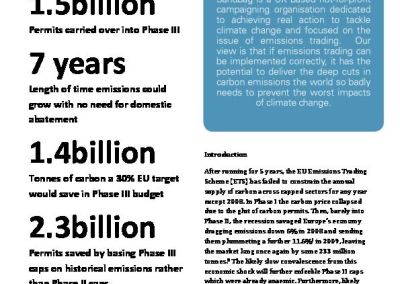
After running for 5 years, the EU Emissions Trading Scheme (ETS) has failed to constrain the annual supply of carbon across capped sectors for any year except 2008. In Phase I the carbon price collapsed due to the glut of carbon permits. Then, barely into Phase II, the recession savaged Europe’s economy dragging emissions down 6% in 2008 and sending them plummeting a further 11.6% in 2009, leaving the market long once again by some 233 million tonnes.ii The likely slow convalescence from this economic shock will further enfeeble Phase II caps which were already anaemic. Furthermore, likely carryovers of at least 1.5 billion permits from Phase II could allow emissions to grow with no further need for domestic abatement until as 2017 or later.
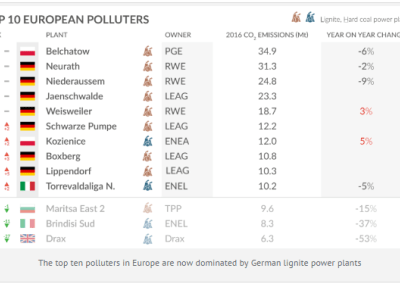
This report presents company level analysis of the EU Emissions Trading Scheme for 2008 and looking ahead till 2012 when the current phase of trading ends.
The EU ETS was set up ‘to promote reductions of greenhouse gas emissions in a ‘cost-effective and economically efficient manner’ as a centrepiece of European efforts to tackle climate change. However, our company level analysis has uncovered a number of trends which have serious implications for the short and long term future of the ETS.
The following report is based on a consolidated database of information about the use of offsetting in the EU EmissionsTrading System in 2008.This data links for the first time the users of international offsets (Certified Emissions Reductions or CERs) for compliance with EU caps, to the projects they have bought credits from.
The end of 2009 saw the long awaited Copenhagen negotiations ending in disappointment with no legally binding emissions reduction targets to succeed those in the Kyoto protocol and only a minimal political accord being agreed. the EU's policy of using its conditional target to secure additional commitments from other countries has not delivered. however, January 2010 does offer the EU one last chance to inject much needed bite to the Copenhagen process, and to reclaim its role and reputation as a leader on climate change. at the end of the month, the Copenhagen accord will be finalised with all countries required to put forward their proposed emissions reductions for the period up to 2020.
The EU Emissions Trading system is the most extensive example of cap and trade regulation of greenhouse gases in existence to date. It be- gan in 2005 with a two year preparatory phase and is now in its first formal phase (beginning in 2008 and ending in 2012). The rules governing the scheme post 2012 have been agreed but are conditional on UN climate agreements.
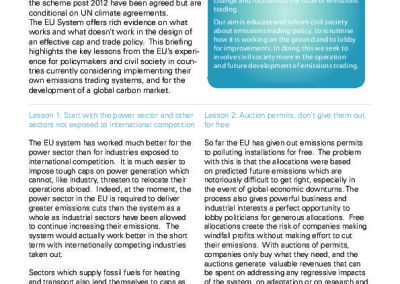
The EU System offers rich evidence on what works and what doesn’t work in the design of an effective cap and trade policy. This briefing highlights the key lessons from the EU’s experi- ence for policymakers and civil society in coun- tries currently considering implementing their own emissions trading systems, and for the development of a global carbon market.
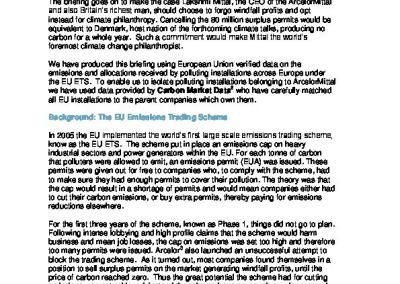
This briefing examines how the world’s biggest steel company, ArcelorMittal, is set to become the largest1 beneficiary of the EU Emissions Trading Scheme. By 2012 the company is set to have 80 million permits to pollute which it does not need and which it was given for free. If sold, these will make over £1 billion in windfall profits by 2012, paid for in part, by UK power consumers.
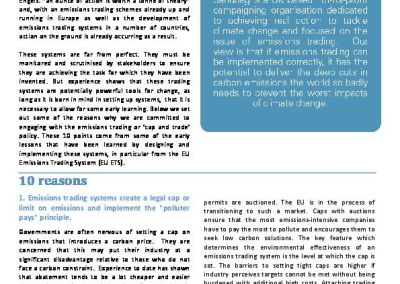
The key goal for all those concerned about climate change is too see global emissions peak and decline in the near future. Though there are many theories about how best this can be achieved an ounce of action is worth a tonne of theory and, with emissions trading schemes already up and running in Europe, action on the ground is already occurring as a result. Trading systems introduced so far still need to develop. They must be monitored and scrutinised by civil society to ensure they are achieving the task for which they have been invented. But they are potentially powerful tools for change. Below we set out some of the reasons why we are committed to engaging with the emissions trading or ‘cap and trade’ policy and to lobbying for improvements. `
This document describes the objectives and goals of the One Giant Leap campaign.
This briefing explores three aspects of the EU's current climate change targets: - the degree of spare permits or 'hot air' that will be available for use in the next commitment period - we focus on permits issued to companies covered by the current phase of the EU Emissions Trading Scheme; - the appropriateness of the target setting formula the EU developed for itself in advance of the Copenhagen negotiations; - the effect of comparing Annex 1 country targets against different baseline years.
The EU Emissions Trading System (ETS) is a central plank of the EU's policy framework towards tackling climate change. Covering 50% of Europe's emissions it creates approximately 2 billion tradeable permits a year. The scheme has the capacity to be a very powerful tool in cutting carbon emissions in the EU but it is currently a blunt tool, not delivering to its full potential. This report identifies two major flaws with the Emissions Trading Scheme as it stands and discusses the impact of these in relation to EU ambition on tackling climate change.
The UK is now liable to meet legally enforceable carbon budgets.
To account for the fact that ~50% of emissions of CO2 are covered by the EU ETS Government has chosen to count traded effort towards the meeting of these budget (as opposed to counting actual emissions). This is supported by the argument that emissions reductions are valid contributions to countering global climate change irrespective of where they occur and that trading helps to minimise cost by uncovering least cost abatement.
It is the initial allocation of permits that therefore contributes towards the budget. That is to say purchased permits/credits can be used to counteract or 'offset' any emission occurring above the initial allocation. Similarly any under emission resulting in sold or banked permits cannot be counted towards the budget (since they result in emissions occurring somewhere else).
A key criteria for a global climate change deal in Copenhagen in 2009 is that it should be sufficient, meaning that it must address the need for global emissions to peak and decline quickly. Time is a critical factor in the science of climate change. Delaying action increases risk.
And yet reaching a global deal has proved to be a complex and time consuming issue. Global emissions are currently increasing at approximately 2.5% per annum – last year adding an additional 27 billion tonnes of carbon dioxide to the atmosphere 20% of which will still be present in the atmosphere around 1,000 years later.
The sooner the growth curve in emissions peaks and declines the better, both in scientific terms and in terms of communicating that progress is possible and the problem resolvable.